Across Australia, many schools talk about transformation. Far fewer actually achieve it. In Darwin, one school’s journey is a powerful lesson in what real change in education looks like, and the difference it can make to each student’s educational experience and to the staff who support them.
Since 2018, Haileybury Rendall School (HRS) has worked hard to be recognised as one of the Northern Territory’s top-performing schools – in 2023 it was named Australia’s Regional School of the Year in the prestigious Australian Education Awards.
Each day, inside and outside the classroom, students and staff balance strong academic outcomes and broad extra-curricular achievements with fostering a spirit of enterprise, entrepreneurship, inclusiveness and care.
Everyone is welcome at HRS and everyone is given the support and skills they need to build their future.
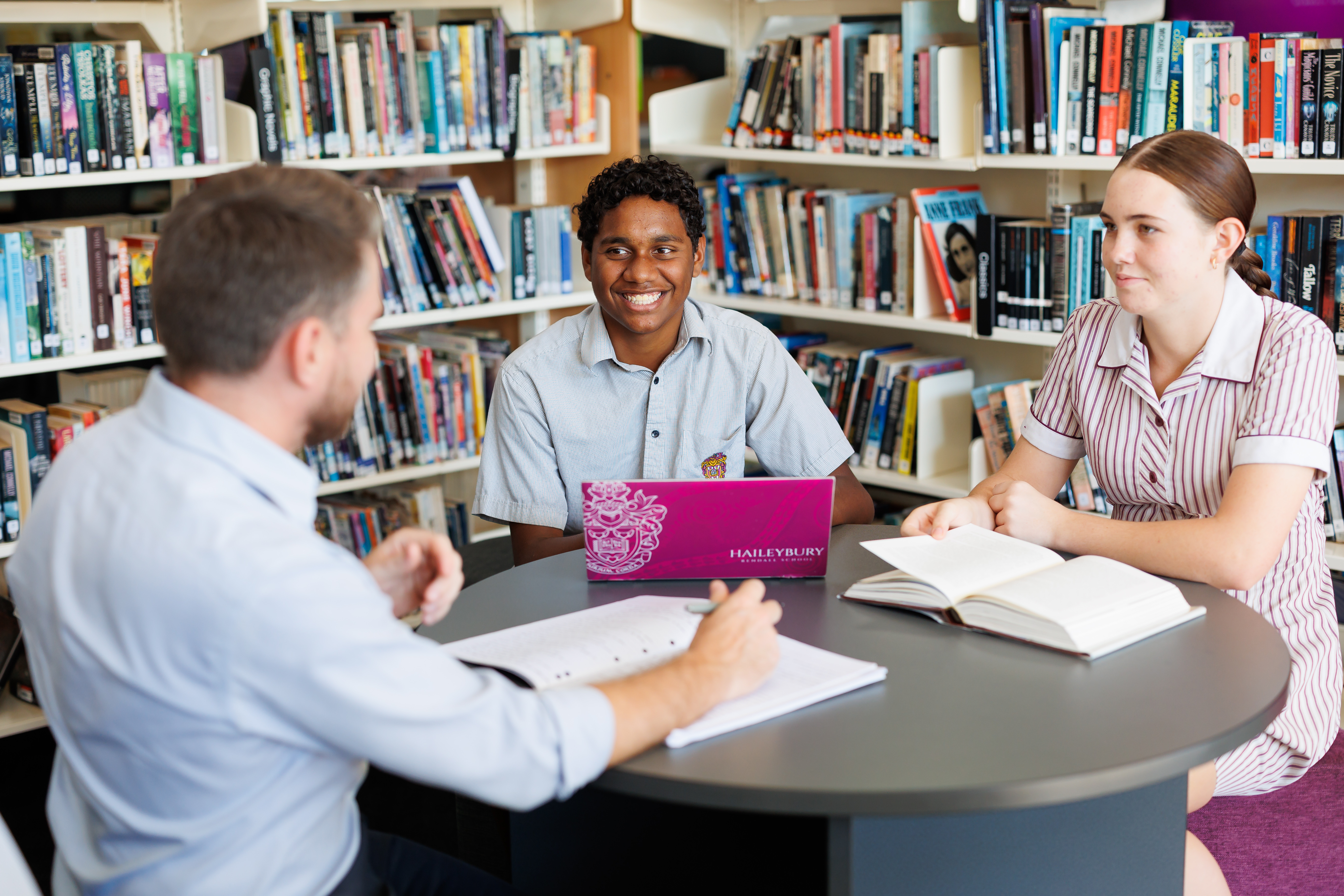
Focusing on the fundamentals
These positive changes are built on a clear shift in leadership thinking and a sustained focus on the fundamentals of good schooling.
Andrew McGregor took on the role of Principal in 2021 and his first priority was to clarify what the school stood for, what the community needed and what ‘success’ specifically looked like in the Darwin context.
Because Darwin’s education environment is unlike that of most Australian cities and HRS serves a highly diverse student population, including students who travel hundreds of kilometres from remote communities, Indigenous students, local residents, internationals and defence force families posted to the area.
Making a conscious decision to be different
Working with the leadership team at HRS and leveraging deep expertise from colleagues at Haileybury in Melbourne, Andrew identified how HRS could meet the needs and expectations of students, families and staff.
Consistent teaching practice, strong academic foundations, and a culture with clear expectations and support for students have been key.
“Schools can sometimes fall into the trap of trying to do too many things,” says Andrew.
“For us, the focus has been about clarity and consistency. When students walk into a classroom, they should know what good learning looks like and how to succeed.”
An emphasis on structured teaching and learning includes using Haileybury’s tried and proven explicit teaching, phonics and evidence-based practices.
Research clearly highlights the benefits of explicit instruction, especially when teaching foundational concepts like phonics and numeracy in the younger years. As educators, teachers at HRS are on the frontline of implementing these programs to have the best possible impacts and outcomes on students.
Haileybury has been delivering evidence-based literacy and numeracy programs, including phonics and explicit instruction for over 19 years, with an explicit teaching model based on ‘I Do, We Do, You Do.’
At HRS, a consistent instructional approach is embedded across the school, supported by extensive and purposeful professional learning and shared expectations for teaching practice. Evidence suggests this approach is helping many students to close significant literacy and numeracy gaps, while building their confidence and engagement in the classroom.
However, academic structure alone does not build a successful school.
Building trust and community
Equally important has been building belief and trust across the HRS community. This requires leadership stability and a clear sense of direction.
This process has been supported at HRS by a strong commitment to student wellbeing and cultural inclusion. The school has embedded a comprehensive wellbeing framework that supports students’ physical, emotional and social development, and recognises that engagement and a genuine sense of belonging are essential conditions for learning.
This approach has been especially significant given the school’s unique student mix.
Around 15 per cent of HRS students are Indigenous, with many living onsite in boarding. Supporting these students calls for an environment that is culturally safe and connected to community. HRS is a former Boarding School of the Year (2022) in the Australian Education Awards in recognition of respectful and inclusive community.
“HRS sits on Larrakia country and more than 110 young Indigenous people from across the Northern Territory, Western Australia and Queensland are at the heart of our school community,” says Andrew.
“Every day, each of those students engages in two-way learning in an environment that is culturally, physically, psychologically and spiritually safe. They are encouraged and supported to feel valued and successful.”
Walking and learning in ‘two wonderful worlds’
The school has invested in initiatives such as an Indigenous Wellbeing Hub, partnerships with organisations including the Stars Foundation and Clontarf Academy, and professional learning for staff in cultural competence and trauma-informed practice.
The aim is to help students navigate what Andrew describes as ‘two wonderful worlds’ – maintaining a strong connection to culture and community while accessing opportunities that come with a high-quality secondary city-based education.
“We want our Indigenous students to feel proud of who they are and where they come from, while also giving them skills and confidence to thrive in the wider world,” says Andrew.
The plan is working. Each year, more Indigenous students complete Year 12, which is an important milestone in a region where secondary school completion rates have historically been low.
More than academic results and rankings
Like its sister campuses in Melbourne, HRS recognises that young people are more than their academic results. A strong co-curricular program, a spirit of entrepreneurship and enterprise, and sporting achievements are also encouraged and celebrated and form a bedrock of the school’s success.
Students explore Music and the Performing and Visual Arts, social justice initiatives, an outdoor education program that sees them skipper a sailing boat or kayak and camp and HRS students compete in sport at local, territory or national level.
Yet perhaps the most important lesson from the HRS story lies in what the school chose not to pursue.
Education systems often search for dramatic interventions or breakthrough programs that promise rapid improvement. The experience in Darwin suggests sustainable and considered change is the way forward.
School transformation rarely comes from doing more. More often, it comes from identifying the few things that matter most and committing to doing them exceptionally well.
“If you’re clear about what matters most — strong teaching, high expectations and genuine care for students, everything else begins to fall into place,” says Andrew.
“We are very proud of the fact that, when young people leave our school, they go on to contribute to their families, communities and to the wider world to help make our country a far better place for future generations.”


